The forest is rarely silent. Birds call overhead, insects hum in the undergrowth, and somewhere in the tangle of vines and branches, a small shape clings to a tree and waits for someone who is not coming back.
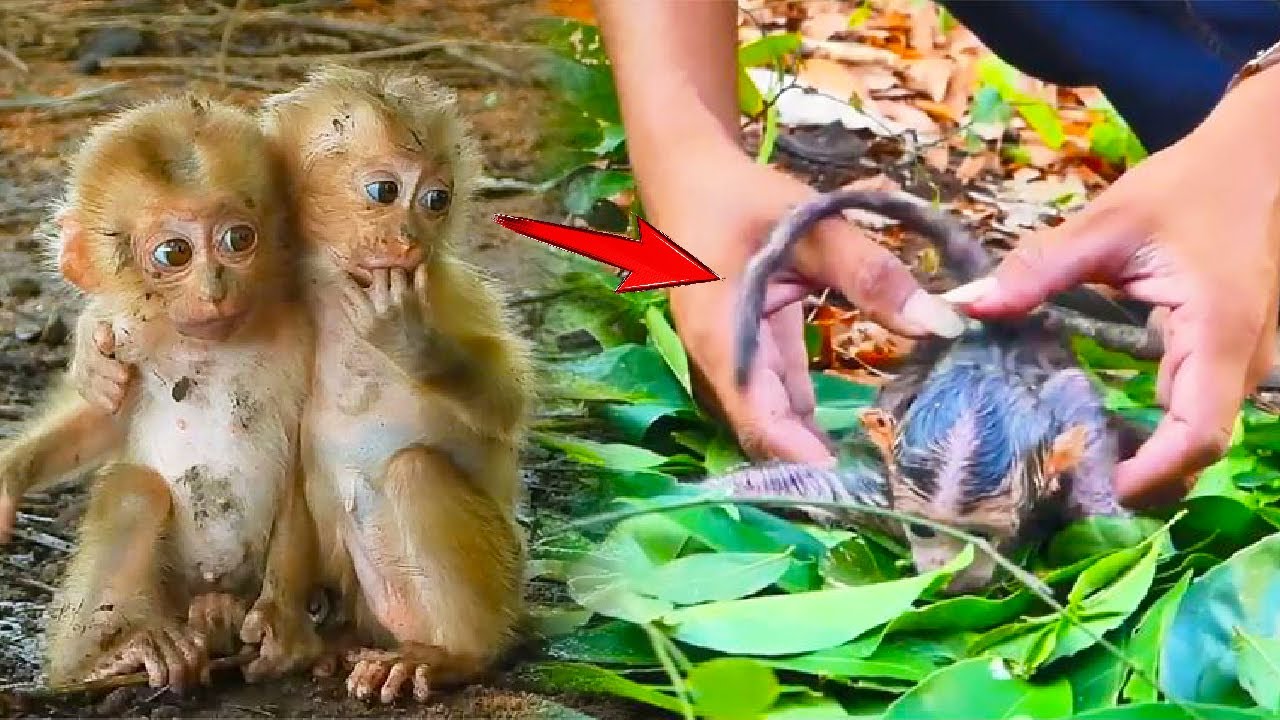
That is the scene at the heart of a recent Wildlife Planet video documenting a baby monkey abandoned by its mother deep in the forest. Alone, visibly frightened, and without the warmth of a maternal presence, the infant is left to face an environment that did not pause to accommodate its vulnerability.
From the earliest moments of the footage, the young animal’s distress is unmistakable. It moves cautiously, pausing frequently, scanning its surroundings with wide, uncertain eyes. Every sound seems to register as a potential threat. Every shadow carries weight. The behaviors are not dramatic in a performed sense — they are simply honest, the unguarded responses of a creature that expected comfort and found none.
Abandonment in primates, while not unheard of, carries significant consequences. Young monkeys depend on their mothers not only for nutrition but for warmth, social learning, and protection from predators. In the absence of that bond, survival odds diminish sharply. The infant must navigate dangers it has not yet been taught to recognize, relying instead on instinct alone.
What makes this footage quietly compelling is its restraint. Wildlife Planet does not dramatize the moment or impose a narrative on the animal’s experience. The camera simply observes, allowing the baby monkey’s behavior — the tentative movements, the searching glances, the occasional vocalizations that go unanswered — to tell the story without embellishment.
There are no easy explanations offered for the mother’s absence. In nature, abandonment can stem from illness in the infant, stress on the mother, the pressure of predator pursuit, or circumstances that remain entirely opaque to human observers. The video does not speculate. It documents.
Somewhere in that restraint lies the footage’s most affecting quality. It does not ask the viewer to feel a particular way. It simply presents a small animal at a crossroads, and trusts the audience to understand what is at stake.
The young monkey, for its part, does not give up. It continues to move, to explore, to test the world around it. Whether instinct, stubbornness, or something harder to name drives it forward, the animal keeps searching — for food, for safety, for the presence of another living thing willing to offer shelter.
In the vast, indifferent architecture of the forest, that persistence carries a quiet kind of weight. It is not triumph. It is simply the oldest story in the wild: a creature deciding, without language or reflection, to continue.
Source: Wildlife Planet, “Baby monkey abandoned by mother in the forest, baby monkey is alone and scared,” YouTube.
Watch the original video →