Long before the temples of Angkor were built, before the kingdoms rose and fell and the jungle reclaimed its ground, monkeys moved through the forests of Southeast Asia in family groups bound together by sound, touch, and an attachment that time has never managed to erode.
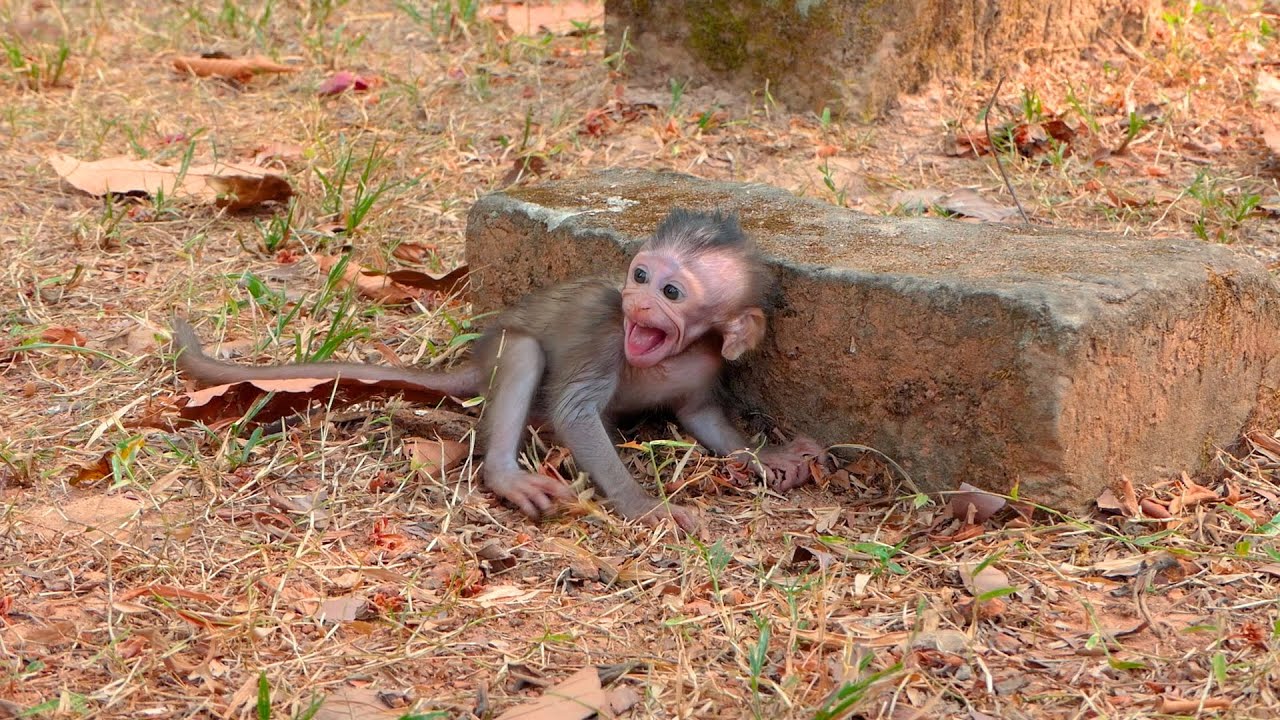
A short video posted by the YouTube channel Angkor Monkey Stories places that ancient continuity on full and quiet display. In it, a tiny baby monkey cries out with unmistakable need, its small voice cutting through the ambient sounds of the environment while its mother moves nearby, calm and steady, before drawing close once more.
The footage may be brief, but the story behind it stretches back an extraordinary distance.
The Angkor region of Cambodia — famous for the UNESCO World Heritage temples that draw visitors from around the world — is also home to thriving populations of wild and semi-wild primates. For generations, monkeys have lived alongside the human communities there, moving through temple corridors and forested edges with a familiarity that speaks to centuries of coexistence. In many traditions across Southeast Asia, monkeys carry deep cultural and spiritual significance, connected to figures in Hindu and Buddhist mythology that are woven into the very stones of the Angkor complex.
Against that backdrop, the behavior documented by Angkor Monkey Stories takes on an additional dimension. What appears to be a simple moment — an infant calling for its mother, a mother returning to her young — is also a thread connecting the present to an unbroken line of primate life in one of the world’s most historically layered landscapes.
Channels like Angkor Monkey Stories play a specific and increasingly valued role in bringing this kind of footage to global audiences. Wildlife documentation in the digital age has democratized access to animal behavior in ways that traditional broadcasting rarely achieved. A clip filmed in the shadow of ancient temples can reach millions of viewers who will never visit Cambodia, offering a window into ecosystems and animal lives that might otherwise remain invisible.
For conservationists, footage like this also serves a practical purpose. Public familiarity with primate behavior — their social bonds, their emotional expressiveness, their visible vulnerability — builds the kind of empathy that supports broader conservation efforts. It is difficult to remain indifferent to the needs of an animal whose cries carry such recognizable urgency.
The baby monkey in the footage does not know it is being filmed. It does not know that its cries are reaching viewers in countries its species has never inhabited. It knows only that its mother is nearby, and that the sound of its own voice is the surest way to bring her closer.
In that knowledge, millions of years old and still entirely reliable, something essential about life in the natural world is preserved — and shared.
Source: Angkor Monkey Stories, YouTube.
Watch the original video →