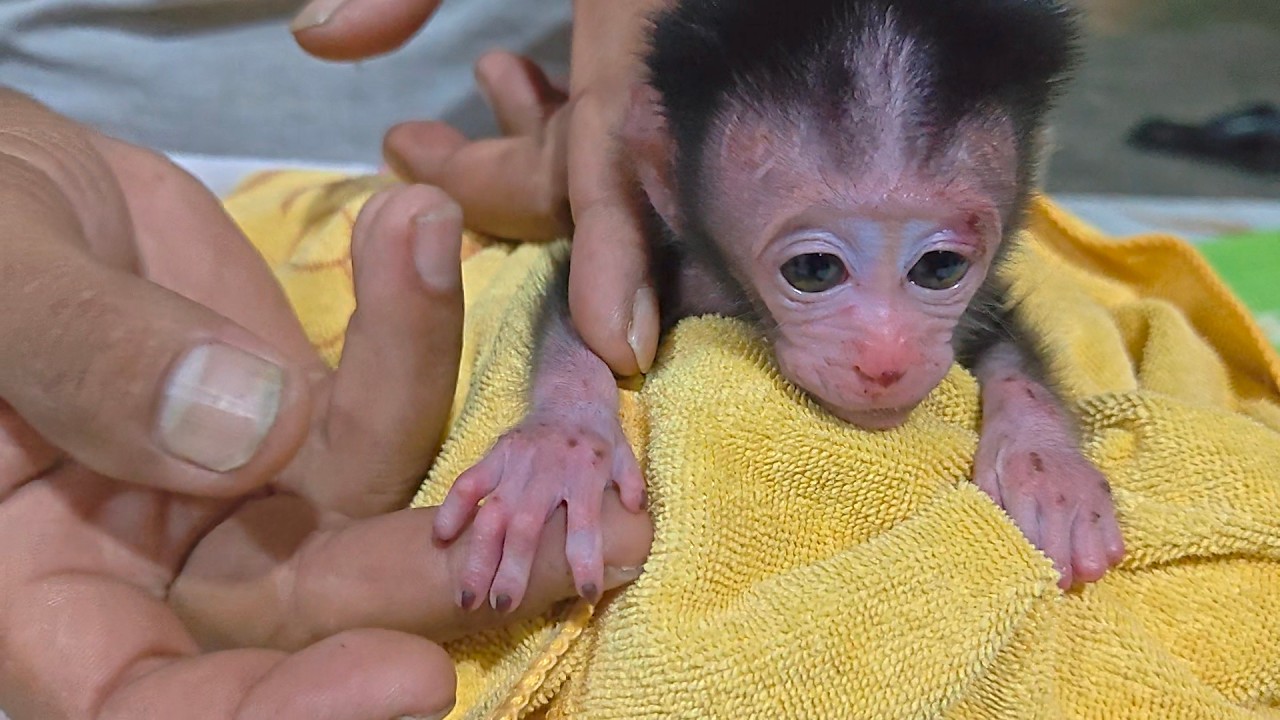
In the dappled shade of a forest clearing, a tiny figure struggles to grip the branch that should have been its first anchor to the world. The newborn monkey, barely days old, cannot hold on the way nature intended. Both of its small hands are injured, and every attempt to cling, to reach, to simply be a baby primate, is met with an obstacle its fragile body was never meant to face.
Footage shared by the wildlife observation channel SAKA.I.S ANIMAL captures the distressing condition of the infant in unsparing detail. The video, which has drawn significant attention online, shows the young monkey attempting to navigate its surroundings despite the wounds affecting both hands. For a species whose entire survival instinct is built around grasping — clutching a mother’s fur, swinging between branches, finding food — the loss of that basic function at the very start of life carries profound consequences.
Observers documenting the animal noted the visible injuries and the apparent difficulty the newborn experienced with even the most routine movements. While the exact cause of the wounds was not specified in the footage, injuries of this nature in young primates can result from a range of circumstances, including birth complications, encounters with predators, or environmental hazards near human settlements.
What makes the footage particularly striking is the contrast between the monkey’s evident fragility and its persistent attempts to move and interact with its environment. Despite the pain it appeared to be experiencing, the animal did not remain still. It pushed forward with the instinctive drive that defines survival in the wild, even when the odds are weighted heavily against it.
For wildlife observers and animal welfare advocates, scenes like this one serve as a stark reminder of how precarious life can be for wild primates in their earliest days. Newborns in primate communities depend almost entirely on physical contact and the ability to hold on — to a caregiver, to a safe surface, to the group itself. When that capacity is compromised, the risk of separation, exposure, and decline rises sharply.
The channel SAKA.I.S ANIMAL, which focuses on documenting animal behavior and welfare in natural and semi-wild settings, regularly shares footage intended to bring attention to the conditions facing vulnerable creatures. Videos of this kind often spark discussion among viewers about the responsibilities humans carry toward wildlife, particularly in regions where habitat loss and human activity bring animals into closer and more dangerous proximity with people.
The newborn monkey in this footage represents something larger than a single difficult moment caught on camera. It represents the quiet, daily struggle of wild animals navigating a world that is frequently indifferent to their vulnerability. Whether it received care or continued on its own remains unknown, but its image lingers as a testament to resilience under the most difficult of beginnings.
Source: SAKA.I.S ANIMAL, YouTube.
Watch the original video →